Read this article in 中文 Français Deutsch Italiano Português Español
Biodiesel offers direct pathway to carbon emission reduction
24 September 2026
John Deere Power Systems on its expanding renewable fuel compatibility
 Eric Risius. (Photo: John Deere Power Systems)
In off-highway equipment applications, performance comes down to a simple calculation: how much work gets done before the sun goes down. For operators pulling heavy loads, harvesting thousands of acres, or working remote jobsites, equipment downtime directly impacts the bottom line. While alternative power solutions continue to develop, internal combustion engines will remain the primary power solution for heavy-duty applications for the foreseeable future.
Operators seeking to reduce carbon emissions today need practical options that maintain daily output. Renewable fuels such as biodiesel, offer a direct pathway. As a lower-carbon option, biodiesel integrates into existing equipment and fuel supply chains, giving operators fuel flexibility without disrupting daily workflows.
Meeting power density requirements
Understanding the value of renewable liquid fuels starts on the jobsite. Heavy-duty applications demand high power density and fast response to sudden load changes when operating under tough working conditions. Liquid fuels remain the most effective way to deliver continuous output so equipment can work full shifts far from central fuel depots.
To maximize these performance traits, engine manufacturers are designing modern platforms specifically for greater fuel efficiency and output. Platforms such as the John Deere Next Generation Engine (NGE) lineup reflect this design approach. Through improved combustion, higher fuel injection pressures, and optimized packaging, modern engines deliver higher torque density in smaller physical footprints. Integrating biodiesel into these engines does not compromise those performance traits. Biodiesel delivers the necessary power density and high-torque output to keep machines operating at full capacity and on schedule.
Engineering for higher blends
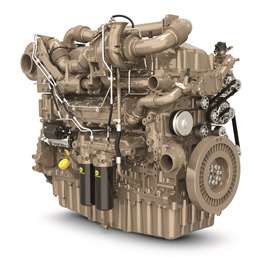 The JD18 engine from John Deere Power Systems. (Photo: John Deere)
Expanding renewable fuel compatibility is an important area of engine development. Validating engines for higher blends allows operators to adopt renewable fuels while protecting equipment longevity and daily uptime.
Last year, John Deere expanded its biodiesel compatibility, increasing the previous blend approval from B20 to B30 biodiesel blends across its portfolio of Final Tier 4/Stage IV and Interim Tier 4/Stage III B engines. Additionally, Tier 3/Stage III A and lower-tier engines without exhaust filters remain approved for up to 100% biodiesel (B100), while Stage V engines operated in the European Union are approved for blends up to 8% (B8).
Achieving this compatibility requires targeted engineering to protect key components under heavy duty cycles. Fuel injectors must deliver fuel consistently across varying blend ratios, while engine seals, hoses, and gaskets must withstand higher bio-content over thousands of operating hours. Additionally, the engine oil system must prevent fuel dilution while keeping internal components lubricated so operators can maintain standard maintenance and oil-change schedules.
Leveraging existing infrastructure
Beyond engine durability, the broader business case for biodiesel rests on simple logistics. Biodiesel functions as a drop-in fuel, avoiding the capital-intensive infrastructure investments required by other alternative power solutions.
Rather than needing dedicated charging stations or specialized gas transport, biodiesel utilizes the existing liquid fuel supply chain. Bulk storage tanks, transport trucks, and jobsite refueling procedures remain identical to standard diesel operations.
This logistical compatibility also provides critical flexibility against regional supply shifts. As regional markets evaluate different blend availability, fuel-flexible engine designs allow operators to move between B30, lower biodiesel blends, renewable diesel, and standard diesel without returning engines or altering maintenance routines.
Supporting agriculture and other off-highway industries
This operational flexibility creates an economic ripple effect that extends beyond individual jobsites. Expanding renewable fuel adoption across off-highway sectors directly supports agricultural producers. Biodiesel derived from agricultural feedstocks creates a direct economic loop: The industries growing the crops use the fuel in their own equipment to power their operations.
As global markets evaluate localized emissions standards, fuel-flexible engine platforms help operators adapt to varying fuel availability and regulatory environments across different operating regions.
Reducing off-highway emissions ultimately relies on engineering that fits real-world jobsite realities. By advancing internal combustion engine efficiency and expanding compatibility with renewable fuels like biodiesel, engine manufacturers give operators a practical, low-risk way to lower carbon emissions.
By pairing liquid power density with established fuel logistics, biodiesel users demonstrate that maintaining jobsite productivity, protecting equipment longevity, and adopting lower-carbon fuel options can happen simultaneously.
About the author: Eric Risius is product marketing manager - Combustion Engines & Renewable Fuels for John Deere Power Systems.
POWER SOURCING GUIDE

The trusted reference and buyer’s guide for 83 years
The original “desktop search engine,” guiding nearly 10,000 users in more than 90 countries it is the primary reference for specifications and details on all the components that go into engine systems.
Visit Now
STAY CONNECTED



Receive the information you need when you need it through our world-leading magazines, newsletters and daily briefings.


CONNECT WITH THE TEAM