Read this article in 中文 Français Deutsch Italiano Português Español
DiPerk reports duty cycles affecting regen in Stage 5 engines

17 July 2026
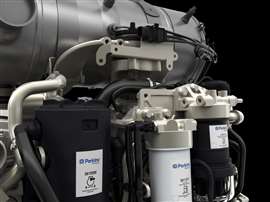 Exhaust aftertreatment components on a Perkins engine - duty cycles can affect regeneration (Photo: DiPerk)
Changes in machine usage patterns across construction and power generation applications are contributing to reliability issues with Stage 5 engines.
This, according to Perkins engine specialist DiPerk Power Solutions.
According to the company, many Stage 5 engines are now running at very low loads over long periods, operating intermittently or repeatedly being shut down before exhaust aftertreatment systems have reached the temperature required to function effectively.
This can interrupt regeneration cycles and block diesel particulate filters, a situation which will require immediate servicing.
According to DiPerk, the issue is becoming increasingly common across construction applications where usage patterns are very different to those originally proposed.
“In many cases the engine itself isn’t the issue,” said Gavin Lester, head of Service at DiPerk. “What we’re increasingly seeing is a mismatch between modern Stage 5 engines and the way some machines are being used on site.
“Twenty years ago, operators often wanted the biggest engine possible because it gave them confidence they had power in reserve. But Stage 5 engines behave differently. In some applications a smaller engine working harder can actually perform more reliably than a larger engine spending most of its life on a light load.”
He noted that in one instance, dumpers are used more like wheelbarrows, carrying material only a short distance before being unloaded manually instead of using the hydraulic tipping system. This does not make the engine work hard enough (achieve sufficient load) to maintain the temperature needed for efficient, reliable regeneration.
Repeated stop-start events can further compound the issue. Machines can be switched off multiple times per hour to reduce unnecessary idling. Again, this prevents temperature build up and efficient regen.
“You can end up in a difficult position, operationally,” added Lester. “The engine may need to keep running to complete the regen cycle, but site practises discourage unnecessary idling. This means the regen cycle could be repeatedly interrupted, increasing the likelihood of forced regeneration events and avoidable downtime.”
DiPerk further noted that the issue is particularly pronounced across rental fleets, where machines may operate across a wide range of applications and duty cycles.
“Stage 5 was probable the biggest operational shift the diesel engine industry saw in decades, where the aftertreatment system became as important as the engine itself,” continued Lester. “Operators now need to think not just about engine power, but how the equipment is actually being used.”
POWER SOURCING GUIDE

The trusted reference and buyer’s guide for 83 years
The original “desktop search engine,” guiding nearly 10,000 users in more than 90 countries it is the primary reference for specifications and details on all the components that go into engine systems.
Visit Now
STAY CONNECTED



Receive the information you need when you need it through our world-leading magazines, newsletters and daily briefings.

CONNECT WITH THE TEAM