Emesent secures grant to develop Cortex AI

14 August 2026
Emesent, an Australian autonomous mapping and robotics company, has been awarded a USD $2 million grant from the Australian Government’s Cooperative Research Centres Projects (CRC-P) program to develop and commercialize its Cortex AI GPS-denied open, modular autonomy platform.
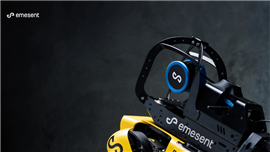 The $2 million grant will aid development of Emesent’s Cortex AI GPS-denied autonomy open platform. (Source: Emesent)
Cortex AI is designed to enable any robotic system or vehicle to navigate, map and operate in challenging and GPS-denied environments, such as underground mines, building interiors, tunnels and contested military environments. It is being built on the same SLAM and autonomy technologies already proven in Emesent’s Hovermap and GX1 products.
The project, valued at a total of USD $5.1 million and funded by the Australian government, is focused on delivering sovereign capability, accelerating Australian robotics development and enabling global competitiveness. It is led by Emesent with support from Queensland University of Technology (QUT) and EPE, a specialist in ground and aerial robotic systems.
The project will combine Emesent’s navigation re-architected into modular APIs, QUT’s physical AI for scene understanding and validation through EPE’s robotics solutions. According to Emesent, the hardware-agnostic robotics operating system will drastically compress integration timelines for aerial and ground robots as well as vehicle automation applications through layered APIs and SDKs and new, advanced capabilities.
“Emesent’s vision is to be world leaders in autonomous digitization of the most challenging and unreachable places on earth. That starts with robots that can navigate and sense autonomously, without GPS, on any platform,” said Dr. Farid Kendoul, chief technology officer and co-founder of Emesent. “Cortex AI is the engine that makes this scale possible, opening our proven autonomy to OEMs and partners so that more Emesent-powered systems can operate in the field, feeding richer data into Aura Cloud, and closing the loop between the physical world and the digital twin.”
A working prototype of Cortex AI has already been deployed with more than a dozen early adopter organizations across defense, mining and the built environment and integrated into drones, ground robots and heavy vehicles.
POWER SOURCING GUIDE

The trusted reference and buyer’s guide for 83 years
The original “desktop search engine,” guiding nearly 10,000 users in more than 90 countries it is the primary reference for specifications and details on all the components that go into engine systems.
Visit Now


CONNECT WITH THE TEAM