How to reduce fuel, maintenance costs with ePTOs
16 September 2026
For idle-heavy duty cycles, ePTO systems let fleet operators work with the engine off
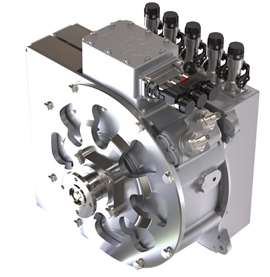 For fleets, the practical value of an ePTO is not simply that it adds electrification to the vehicle. It is the movement of auxiliary work away from the diesel engine. (Illustration: Turntide Technologies)
The engine often performs two jobs in work trucks and other vehicles: It provides traction and it also supplies the power required when the vehicle is stopped and doing some other form of work. A mechanical power take-off (PTO) system can operate a crane, hoist, mixer, compressor, pump, refuse body or other hydraulic function from the engine or transmission. It is a proven setup, but it comes with a familiar drawback: the engine keeps running after the truck has stopped moving.
That idle time is where electric power take-off (ePTO) systems make sense. Instead of relying on an idling engine to drive auxiliary equipment, the ePTO uses stored electrical energy from a battery or hybrid energy storage system to power a motor-and-inverter package. The motor can then drive a hydraulic pump or mechanical interface only when work is required, no engine idling required.
What changes with an ePTO
The biggest shift is simple: Work can continue without the engine idling. In a conventional PTO arrangement, the engine must operate at idle or above idle to provide the shaft speed needed for hydraulic flow. An ePTO separates that work function from engine speed. For vehicles that spend a large part of the day stopped with equipment running, that can translate directly into less fuel use during idling operation, decreased emissions and fewer accumulated engine hours.
Those engine hours matter. Idle time contributes to maintenance intervals and wear on aftertreatment systems, belts, fluids and other engine components.
Removing stationary work from the engine’s duty cycle can reduce the service burden over time. It also makes worksites quieter, which is useful for municipal operations, night time work and urban routes where decreased noise is often part of the specification.
The change is about turning off the engine and giving original equipment manufacturer (OEM) engineers and designers more control over how power is delivered. A pump-mounted electric motor varies speed and torque according to the hydraulic system’s demand instead of following the engine’s rpm. That makes output smoother and more precise, especially at low speed, where the system may need strong torque immediately rather than a gradual build in engine speed.
Axial flux motors
One reason ePTO adoption may be difficult is due to space constraints on the vehicle. Commercial vehicles rarely have unused space waiting for new hardware. Body equipment, frame rails, hydraulic lines, cooling circuits, batteries and existing PTO hardware all compete for room. That is why motor geometry becomes more than a specification-sheet detail.
Axial flux motors are a fit for these systems because they are short in the axial length and perform well in high-torque applications. Their compact, disc-like form factor make placing meaningful power close to a pump or mechanical interface simpler without the need for a major chassis redesign. For retrofit programs, this can be especially important. The easier the motor is to fit withing existing architectures, the more practical the business case is.
Low-speed torque is another advantage. PTO-driven loads often need strong starting torque and fast response but must perform at low speeds. Whether the system is running a pump, compressor or other auxiliary device, a well-matched axial flux motor and inverter deliver torque from standstill, helping the ePTO respond quickly without waiting for the diesel engine to reach a target operating speed.
The inverter matters
The inverter often gets less attention than the motor. However, it has a major influence on how the system behaves. In an ePTO, the inverter controls the motor’s speed and torque response. With the right software and calibration, it can match power delivery to the load.
The matched power delivery matters for efficiency and drivability. A motor-inverter system designed as a package can operate efficiently across a broad working range. Some ePTOs with axial flux motors have about 90% system efficiency and can be configured in 50 kW, 100 kW and 150 kW power classes across 200 V to 850 V. That gives OEMs and upfitters the flexibility to select a system around the duty cycle, available battery voltage and hydraulic power requirement.
Best-fit applications
EPTOs are most compelling where idle time is built into the job. Refuse collection, utility work, municipal service, cement mixing, construction support, cranes, compressors and pumping applications all involve work that continues while the vehicle is stationary. In a hybrid vehicle, that work can be handled from stored energy with the engine off. In a battery-electric vehicle, the same idea applies using the traction battery or a dedicated auxiliary energy source.
The economics depend on the route, duty cycle, battery capacity and hydraulic demand. However, the principle is straightforward: The more time a vehicle spends idling to support work functions, the more opportunity exists to save fuel and avoid engine operation hours. Maintenance savings follow the same pattern, because less idle operation means less wear created by work that does not require propulsion.
Other operational benefits are harder to capture in a spreadsheet. Lower noise makes early-morning refuse routes, downtown utility work or jobsite operation less disruptive. Operators may also benefit from more consistent hydraulic response because the system is no longer tied to engine speed.
Integration matters
None of this removes the need for careful engineering. Designers must still define the appropriate output interface, whether that is a direct pump mount, ISO spline, DIN flange or another configuration. The ePTO also must work with the vehicle’s hydraulic architecture, available mounting space, cooling package and high-voltage system.
Thermal management is especially important in sustained stationary work. Motors and inverters that see repeated high-load events generally need liquid cooling, often through a water-glycol circuit. That cooling strategy should be planned early and not treated as an afterthought once the system is packaged.
For fleets, the practical value of an ePTO is not simply that it adds electrification to the vehicle. It is the movement of auxiliary work away from the diesel engine when traction is not needed. If the truck is parked and the body equipment is doing the work, the engine does not need to idle.
That is the business case for ePTOs in idle-heavy applications. Axial flux motors help address the packaging challenge and provide the torque and smooth operation at low speed that are required. Smart inverters control the work. Together, they give OEMs, upfitters and fleets a more practical path to reduced fuel use, minimized maintenance tied to unnecessary engine hours and an improved work environment without changing the job the vehicle must do.
About the author: Matrishvan Raval is head of product, motors, for Turntide Technologies.
POWER SOURCING GUIDE
The trusted reference and buyer’s guide for 83 years
The original “desktop search engine,” guiding nearly 10,000 users in more than 90 countries it is the primary reference for specifications and details on all the components that go into engine systems.
Visit Now
STAY CONNECTED



Receive the information you need when you need it through our world-leading magazines, newsletters and daily briefings.
CONNECT WITH THE TEAM