Making the most of a free resource: Air

15 July 2026
Proper tire inflation is an overlooked factor in equipment performance
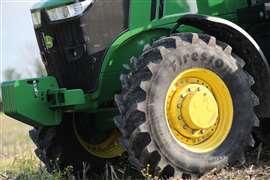 (Photo: Firestone Ag)
“Farmers are constantly looking for ways to improve efficiency, but some of the biggest opportunities don’t come from adding something new,” said Bill Durivage, senior agricultural product strategy manager at Firestone Ag. ““They come from getting more out of the equipment already in the shed.”
When farmers think about improving productivity, air probably isn’t the first thing that comes to mind. Yet the amount of air in a tire can have a significant impact on everything from fuel consumption and traction to soil health and crop yield potential.
“When you consider how much equipment performance depends on air,” said Durivage, “it’s easy to see why it can have such an outsized impact on productivity.”
In an industry where nearly every input carries a cost, air remains one of the few resources available at no charge. Yet many farmers may not fully realize the role proper inflation plays in getting the most from their equipment. Understanding the role air plays in tire performance can help growers make informed decisions that improve efficiency, protect soil health and maximize tire life.
Making the most of a free resource
Tire inflation pressure determines how a tire carries weight, how much tread contacts the ground and how efficiently power is transferred from the machine to the field. Proper inflation helps the tire perform as designed, supporting the load while minimizing stress on both the tire and the soil.
“Many people think of tire pressure as a maintenance item,” said Durivage. “In reality, it’s part of equipment setup. The same machine may require different tire pressures depending on the load it’s carrying, how fast it’s traveling and the conditions it’s working in.”
 Bill Durivage. (Photo: Firestone Ag)
At the same time, soil compaction remains one of agriculture’s most persistent challenges. Heavy equipment, particularly during planting and harvest, can compact the soil, causing damage that limits root development, restricts water movement and affects overall crop performance. Tire inflation plays a major role in managing this risk.
“When tires are inflated beyond what is needed for a given load, the tire footprint becomes smaller, concentrating weight over a reduced surface area,” said Durivage. “This increases ground pressure and can contribute to greater soil compaction. Properly inflated tires create a larger footprint, helping distribute weight more evenly across the soil surface.”
For farmers focused on long-term productivity and outcomes, managing inflation pressure is one of the simplest ways to help protect soil health without making significant equipment changes.
Durivage said one of the biggest misconceptions about tire inflation is that a single tire pressure setting can be used year-round. In reality, tractors, combines, grain carts and sprayers often experience significant changes in load in any given season.
Equipment configurations, field conditions and road travel requirements can all affect the ideal inflation pressure.
“There isn’t a universal tire pressure that works for every machine or every task,” said Durivage. “The best results come from matching inflation pressure to the job the equipment is being asked to do.”
Before heading into the field, the company said farmers should consider:
- Maximum loaded machine weight
- Typical field and road speeds
- Implements being pulled
- Seasonal soil conditions
- Changes in load during the day or season
Factoring in all these variables can make determining the proper inflation pressure feel too complicated. The company said tools such as a tire pressure calculator can help identify the right pressure based on load, speed and tire specifications, taking the guesswork out of tire setup. For farmers looking to simplify inflation management even further, central tire inflation systems can allow tire pressures to be adjusted as equipment moves between field and road conditions.
Modern radial tires have helped farmers take greater advantage of proper air management.
Unlike traditional bias tires, radial tires are designed so the sidewall and tread can function independently. This flexibility allows the tire to maintain a larger, more consistent footprint even while hauling heavier loads. The result is improved traction, reduced soil disturbance and a more efficient operation, said the company.
Many of today’s premium radial tires are also designed to operate at lower inflation pressures while carrying the same loads as conventional tires, helping farmers maintain a larger footprint without sacrificing capacity.
Looking beyond the tire
As planting, spraying and harvest windows tighten, farmers are constantly looking for ways to improve efficiency without increasing costs. Often, the answer isn’t found in a new tractor or implement. Instead, it starts with getting more from the equipment already in the shed.
“Farmers pay close attention to seed, fertilizer and fuel because they understand the return on those investments,” said Durivage. “Air deserves that same attention. It’s one of the few resources on the farm that’s free, yet it plays a role in how much value farmers get from everything else they put into the field.”
POWER SOURCING GUIDE

The trusted reference and buyer’s guide for 83 years
The original “desktop search engine,” guiding nearly 10,000 users in more than 90 countries it is the primary reference for specifications and details on all the components that go into engine systems.
Visit Now
STAY CONNECTED



Receive the information you need when you need it through our world-leading magazines, newsletters and daily briefings.

CONNECT WITH THE TEAM