Read this article in 中文 Français Deutsch Italiano Português Español
MTA on the development drivers fueling new products
20 November 2026
MTA is an Italian company that manufactures components delivered to various automotive, truck and motorcycle manufacturers, together with some construction and agricultural machine OEMs. Founded in 1954 by Antonio Falchetti, the group is still operated by the Falchetti family, now in their third generation of ownership.
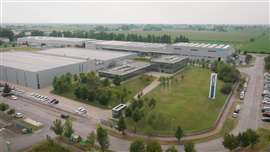 MTA headquarters and production facility in Codogno, Italy. (Photo: MTA)
The company, headquartered in Codogno with 10 sites and four technical sales offices globally, specializes in the design and production of electrical and electronic systems for both low- and high-power applications. These systems manage the distribution of electrical power, while also protecting the related systems. This can be done many ways, but a fuse box is the most obvious example.
These electronic systems feature across the engine, suspension, lights and accessories, through to instrument clusters, HVAC and ADAS functions – essentially every element of the vehicle or machine, There is also a Power division that looks at related systems; the specialty is battery-electric or hybrid vehicles.
Acquired know-how
In 2025, MTA extended its in-house know-how by acquiring a 60% stake in EFI Technology, another Italian company which specializes in the manufacture of engine control units (ECUs) and other related electronic components. Its range also includes battery management systems, inverters, body computers and active suspension controls.
With the acquisition, MTA added experience in the field of electronics for actuation and engine control. As Vittorio Tansella, product line manager for the Electronics division at MTA, explained, “To date, the acquisitions we have made have been driven by identifying market trends and developments in electrical and electronic architecture, our core sector, with the aim of bringing expertise in-house to expand our product portfolio to meet those trends.”
 Antonio Falchetti (left), MTA CEO, and Vittorio Tansella, product line manager for Electronics (Photo: Marco De Vidi)
This is a pattern that extends back over recent years. In 2021, to support hybridization, MTA bought EDN, a specialist in power converters and related electronics that, among other products, are used in battery chargers. The purchase of Calearo in early 2024 supported access to development of wireless connectivity solutions.
“Often what happens is that products you already have are, in response to market demand, adapted and enhanced with the new know-how you acquired,” said Tansella.
Based on this acquired knowledge, fuse boxes manufactured by MTA now deliver such information as temperature, voltage and current, details which were requested by customers.
Likewise, knowledge from EFI Technology has been leveraged to add ‘smart’ features to voltage control units, including a variety of different sensors and insulation monitors.
“These are all functions related to the expertise from EFI Technology,” said Tansella. “Today, we are developing products together by integrating our various areas of expertise.”
Electric trucks
The North American market remains strategically important for MTA. To support this huge market, the company has opened production facilities in both Mexico and Brazil. The company has had operations in these countries for 11 and 31 years, respectively.
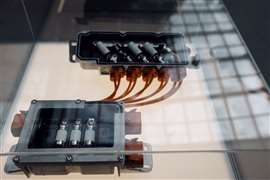 Thanks to acquired knowledge, MTA fuse boxes now deliver such information as temperature, voltage and current. (Photo: Marco De Vidi)
“The greatest satisfaction here comes from the truck and agricultural segments, specifically tractors,” said Tansella. “We’ve had some success in these areas, but everything has slowed down significantly over the past two years. Maybe the sentiment toward electrification has shifted in North America.” This is, in large part, due to changes in environmental regulations.
But Tansella believes that there is still great portential in the electrification of trucks. “This is the challenge, trying to reduce charging times, bringing it as close as possible to the refueling time of a diesel truck, while keeping in mind that if we achieve this parity, the advantages of electric trucks in terms of efficiency and maintenance will be much bigger.”
Of course, there are limitations, primarily the lack of an extended charging network and particularly megawatt-level chargers. As such, it is likely that the first applications of electric trucks will on dedicated routes between fixed points such as company hubs, where charging is guaranteed.
Research in new sectors
Tansella said there is an underlying theme to product development at MTA. “It comes from the desire to understand the direction customers will take and to anticipate their needs.” To back this up, MTA invest about 10% of annual company revenue in R&D.
Experience gained from working with automotive OEMs can serve as the basis for collaborations with other companies. Development of electrical systems for off-highway machines is not wholly removed from those designed for trucks or cars, barring specific customer requests.
Then there are smaller part volumes, often for manufacturers producing specialized machinery that could not recoup the cost of custom component development.
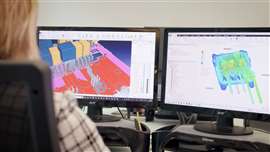 MTA invest about 10% of annual company revenue in R&D. (Photo: MTA)
“For us, these are interesting markets,” Tansella commented. “For these manufacturers we have different product lines in stock, each developed by MTA based on market knowledge.”
He added that MTA is now working “on an exploratory basis” with some smaller customers in the marine and medical markets.
In both cases, these are new applications based on existing power converter technology. “This could be an area we want to further develop in the future,” said Tansellla.
As for whether this will require any further company purchases, MTA CEO Antonio Falchetti said, “We will consider new acquisitions not in the automotive sector, but in products similar to ours but intended for other fields of application.”
Pressure to succeed
India is another area where MTA has been building it business; both facilities in the country have undergone recent expansion projects.
“The market in India is growing rapidly. We will introduce our Electronics division there – there’s some great potential, especially in the two-wheeler sector,” said Tansella.
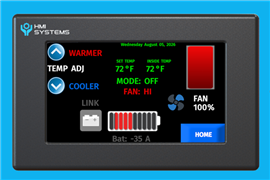
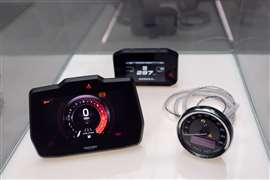 MTA develops and manufactures a complete range of customizable dashboards and displays. (Photo: Marco De Vidi)
But like other markets, contradictory trends can coexist; regulators can push for electrification, but the market could still be struggling to grow. “It’s a risk to our client when they develop a platform without knowing whether it will translate into commercial demand,” observed Tansella. “And it’s a risk to us as we develop components for that platform.”
Another area of tension is the rapid growth of competitors out of China, which are rivals not only to the main automotive companies, but also to component manufacturers such as MTA.
“There is certainly cost pressure when we look to innovate,” said Tansella. “We have won some of the latest projects when we knew we were competing with components produced by a comany from China. We reached cost targets by innovating in specific areas. If we hadn’t faced this type of pressure, we might not have taken that final step.”
POWER SOURCING GUIDE

The trusted reference and buyer’s guide for 83 years
The original “desktop search engine,” guiding nearly 10,000 users in more than 90 countries it is the primary reference for specifications and details on all the components that go into engine systems.
Visit Now
CONNECT WITH THE TEAM