Read this article in 中文 Français Deutsch Italiano Português Español
OPINION: Missteps in European EV development will come back to haunt OEMs

13 August 2026
Development paths taken by European OEMs could have opened the door to competing technologies from China
European vehicle manufacturers have made what could prove to be costly mistakes in their rollout of battery-electric vehicles, both with passenger cars and heavy-duty trucks.
This bold statement directly calls into question related decisions made by some of the first - and hence most experienced - vehicle manufacturers in the world.
Despite that experience, a series of critical missteps made across the introduction of battery-electric (BE) vehicles in Europe could have now opened the door to competing technologies from China. To get a better sense of this, we can first examine apparent errors made in the development and launch of battery-electric (BE) passenger cars in the region.
Mistake summary
A first mistake made by European carmakers was the decision to produce BE models based on existing vehicles designed with IC (internal combustion) engines. Attempting to adapt existing hardware to EV applications compromised the technology and delivered largely mediocre products.
There was also the decision to produce ICE and BE models in parallel. This required development of multiple platform variants and software architectures for the respective models, which only increased capital expenditure and reduced profit margins.
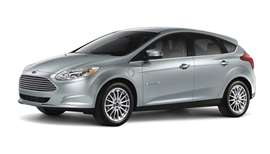 The 2012 Ford Focus Electric was compromised due to its IC roots (Photo: Ford Motor)
Then there was product positioning. The first ground-up EVs produced in Europe were usually the most expensive vehicles in the range. Whether this was to showcase the tech or a route to reclaiming R&D costs is debatable, but at a time when most customers were interested in smaller, more price-effective EVs, range-topping halo cars were only best sellers in a tiny segment.
Lastly, European OEMs failed to prepare for the future. Thirty years ago, cars produced in China by European OEMs were the nation’s best sellers. The vehicles were assembled in China by Sino-European JVs so local managers could learn about vehicle manufacturing.
Moving to the present and the tables have fully turned. It was recently reported that Mercedes sold 1,153 examples of the electric CLA in China in the first half of 2026. Over the same period, the similarly-priced Xiaomi SU7 sold more than 80,000 units. China has not only learned how to build cars, but how to build a lot of cars quickly, inexpensively and with the tech features customers want.
Recharging trucks
A lot of the same holds true for commercial vehicles, particularly when looking at the first converted ICE models fitted with BE drives.
But there’s more. Europe isn’t particularly large when compared to other territories. With this in mind, regional OEMs focused on developing drives dependent on battery storage and recharging capabilities. That technology has now advanced to where megawatt-level chargers can replenish 800 kWh battery packs in about two hours.
This is where the European truck OEMs are not wholly complicit in creating their own problems. Lack of grid capacity, underinvestment and a forfeit of clear EU policy have all created roadblocks on the route to a heavy-duty BE truck recharging network which is fit for purpose.
Companies such as Daimler Truck, Traton and the Volvo Group (grouped under the name Milence) are investing to extend the heavy-duty truck recharging network. But ACEA, the lobby group for the transport industry in Europe, has stated there needs to be 50,000 accessible chargers available by 2030, 35,000 of which need to be in the megawatt (1,000 kW) range.
There is a long way to go. Today, there are about 1,100 public chargers with a capacity of greater than 350 kW.
Battery swap future
This situation has opened the door to new technology developed in China. In June it was announced that battery giant CATL would team up with energy provider Octopus to start a network of battery swap locations called Swaptopus.
And in August, an article published by the IAA reported that two (China-manufactured) DeepWay heavy-duty electric trucks fitted with CATL’s swappable battery tech had completed two years of testing in Germany. Led by EHaul, a German company working on battery swap tech, and Technische Universitat Berlin, the collected data will be used by the UniSwapHD group to further develop standardized battery-swap systems which comply with the related DIN SPEC 91533 specification (see box in this article).
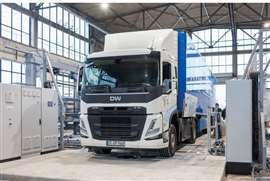 DeepWay BE trucks have completed two years of battery swap tests in Germany (Photo: TU Berlin)
This will include work on developing a network of locations which can complete a battery swap in less than five minutes.
Of course, the compact nature of the European transport system and mandated rest periods lend themselves to a recharging solution. But the potential now is that OEMs have effectively overdeveloped onboard vehicle recharging solutions before the requisite charging network was in place.
This imbalance between vehicles and charging network creates an opportunity for companies using battery swap technology – and new markets for trucks built in China which can use those battery swap facilities.
In May this year, Milence reported it had received €120 million in new financing to support further development of the truck recharging network. Having suitable heavy-duty charging locations strategically positioned around Europe will help to drive sales of BE trucks. But with the plans for battery swap facilities moving ahead, this could end up as another VHS/Betamax or Blackberry/Apple iPhone moment.
CATL opened its first heavy-duty truck battery swap station, operated under the Qiji Energy brand, in November 2024. There are now plans to have 900 locations by the end of 2026 (CATL operates the Chocoswap network for light vehicle battery swap services). If there is one takeaway from this, it is to beware of the relentless speed of execution once a company from China makes an investment decision.
Getting European battery-swap trucks to market
The DIN SPEC 91533 standard was published in April 2026. It covers standardization of the vehicle/battery interface and battery pack dimensions in BE trucks. Currently the standard is adoptable, but not compulsory.
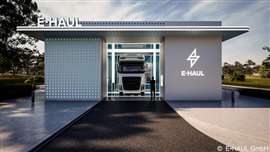 Concept image of EHaul battery swap station for HD trucks (Photo: EHaul)
According to German battery swap tech specialist EHaul, the consortium behind the standard includes CATL, DAF Trucks, Daimler Truck, DHL Group, Iveco, Trailer Dynamics and Traton.
EHaul is also working on the design of battery swap stations. These are designed to operate 24/7 with no personnel, the battery swap procedure being fully automated.
As for European trucks which support battery swap tech, a fleet of 40 vehicles is expected to enter testing in late 2027. But it will likely be around 2030 before any trucks from a European OEM using battery-swap tech will be available to order.
POWER SOURCING GUIDE

The trusted reference and buyer’s guide for 83 years
The original “desktop search engine,” guiding nearly 10,000 users in more than 90 countries it is the primary reference for specifications and details on all the components that go into engine systems.
Visit Now
STAY CONNECTED



Receive the information you need when you need it through our world-leading magazines, newsletters and daily briefings.

CONNECT WITH THE TEAM