Read this article in 中文 Français Deutsch Italiano Português Español
Rare earth magnet alternatives for electric motors

09 February 2026
Most electric motors now feature magnets made using rare earth minerals, but threats to availability and higher prices could see a switch to other technologies
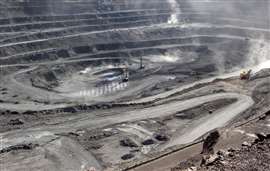 Bayan Obo mine in Inner Mongolia, which contains rare earth minerals (Photo: Reuters)
At the most basic level an electric motor has two primary parts, the stator and the rotor. The stator is a stationary part which, using coils or magnets, creates a magnetic field. That magnetic field produces a force which makes the rotor spin.
By constantly changing the polarity of magnetic field using electrical power (remember how like poles repel?) the rotor is kept in constant motion. That motion delivers drive which can be used to power a fan, a pump or a machine.
The stronger the magnet, the better the power return and longevity of the electric motor. Rare earth minerals, such as neodymium (Nd), dysprosium (Dy) and samarium (Sm), are important, as the addition of these materials can deliver products which are stronger, smaller, lighter and more efficient than a standard iron magnet.
Global supply
Rare earth minerals are not necessarily rare, but they are difficult to mine and process. Different rare earths can be found in most areas around the world, but whether it is feasible to extract those materials has to be decided on a case-by-case basis. Such is the heavy investment requirement and environmental impact, many potential mining locations simply never get the go ahead.
But there are exceptions. Various companies based in China (such as China Northern Rare Earth) have been mining rare earth minerals for decades. This expertise, tied with volume output, has seen the country become a leading supplier to the rest of the world. It is estimated that China now mines about 70% of the ores containing rare earth minerals, while holding an even greater 80% of the global processing capability.
This market domination has seen China institute strategies tied to rare earth exports. There are multiple layers of subtext here, but exports can be limited or increased to gain a political and/or economic advantage.
Such is the grip China holds on the rare earths market that it effectively controls global market prices. Dependent on the goal, the national government can cut or increase supply. Increasing supply can see global rare earth prices fall, making it less likely new mining projects will go ahead, while possibly putting other producers out of business as extraction costs exceed market values. Conversely, cutting supply increases material values and helps products made in China gain a competitive advantage when they come to market.
 MP Materials, located in California’s Mohave Desert, operates the only rare earth mining and processing facility in the United States (Photo: Reuters)
The strategic importance of rare earths cannot be overstated. As a result of China’s hegemony, the United States recently unveiled plans to form a trade zone for rare earths and other critical minerals in an effort to reduce China’s market dominance.
Rare earth alternatives
As noted, rare earth minerals produce permanent magnets with properties favoured by motor manufacturers. The most common of these are NdFeB magnets, which are composed of neodymium (a rare earth mineral), boron and iron.
There are alternatives, though these come with drawbacks. In one case ferrite magnets (also called ‘ceramic’ magnets owing to similarities – in manufacturing, physical properties - with true ceramic materials) can be produced using iron oxide and barium/strontium – and no rare earth minerals. But while these use cheap, widely available materials, they deliver a weaker force so a larger magnet must be used to deliver the same performance.
So-called alnico magnets, made using aluminum, nickel, cobalt and iron, offer another route to elimination of rare earths. Stronger than ferrites, they also have good temperature stability. But again, the overall magnetic force is weaker, while cobalt comes with its own issues with regards to sourcing.
Combining manganese with aluminum (MnAl) or bismuth (MnBi) can also produce magnets with no rare earths, but stability and durability are still issues.
No magnets
It’s also possible to make an electric motor without any permanent magnets. Induction, reluctance or copper-excited motors all leverage solutions which have no magnets.
In one case, BMW is already using externally-excited synchronous motors (EESMs) in its electric vehicles. Developed in-house and produced at the company plant in Steyr, Austria (cast aluminum cases come from the Landshut site in Germany), these ‘electric engines’ will feature in the Gen6 electric powertrains used in the upcoming ‘Neue Klasse’ vehicles.
“Energy loss is reduced by 40%, costs by 20% and weight by 10%. All this makes a significant contribution to the approximately 20% increase in overall vehicle efficiency,” explained Martin Kaufmann, head of Global Powertrain Development at BMW.
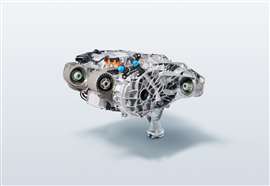 Gen6 magnet-free BMW electric engines are now in production at Steyr plant (Photo: BMW)
Instead of permanent magnets, the EESMs use an external DC current to excite the copper windings around the rotor to create a magnetic field. AC currents in the stator produce a rotating magnetic field, which the rotor locks on to – hence the term ‘synchronous’ in the name. The current delivered to the rotor can be adjusted to control the torque and optimize efficiency.
The result is a high-efficiency motor which offers a controllable magnetic field. While torque density is marginally lower than a motor using permanent magnets with rare earths, the system can cost less if rare earth prices are high.
Coil compression
There are other magnet-free solutions. UK-based Advanced Electric Machines has developed a series of motors intended for on- and off-highway applications. The motors use coil compression technology, a process where stator coils are wound and then mechanically compressed. This results in a very high ‘fill factor’ for the windings of between 60 and 85%, which makes the engine more efficient in terms of energy output and cooling.
The company recently already unveiled its second-generation HDRM300C motor. Designed for heavy-duty and commercial vehicle applications, the new model is said to exceed an 80% slot fill factor. Plus, using aluminum windings, the motors are fully recyclable.
New plug-in connectors have replaced previous gland fittings, simplifying installation and maintenance, while maximising reliability. The motor further adds upgraded bearings and bus bar connections to support higher operational speeds.
Moving forward
The multi-billion dollar question is whether electric motors using magnets produced with rare earth metals will be replaced by models which use a magnet-free technology.
Magnets produced using rare earth minerals offer very favourable performance in terms of weight and size. This, in combination with it being a ‘known’ incumbent technology, means that while some light vehicles might switch to magnet-free motors, most will likely stay with the tech.
In other sectors, the small increase in size and weight of magnet-free models could be less of a drawback, hastening the switch to these types of motor in heavy trucks and buses – particularly the latter as more cities and municipalities make the switch to zero-emissions transport networks.
So China’s dominance of the rare earth mineral market would appear set to continue. Yet, where vehicle suitability and investment backing cross over, there are clearly opportunities to sidestep the rare earth market and benefit from the related advantages.
POWER SOURCING GUIDE

The trusted reference and buyer’s guide for 83 years
The original “desktop search engine,” guiding nearly 10,000 users in more than 90 countries it is the primary reference for specifications and details on all the components that go into engine systems.
Visit Now
STAY CONNECTED



Receive the information you need when you need it through our world-leading magazines, newsletters and daily briefings.

CONNECT WITH THE TEAM