


Read this article in 中文 Français Deutsch Italiano Português Español
The hidden cost of heat in off-highway equipment

25 November 2026
A machine can be losing cooling capacity long before the operator sees a temperature warning.
 Left/right images demonstrate the visible difference a Cleanfix self-cleaning fan can make for cooling packages
As dust and debris build up on the cooling pack, less air passes through its cores.
A variable-speed fan may respond by speeding up, drawing more power from the machine. The operator may see little change on the temperature gauge at first, even as the machine uses more energy to manage the same workload.
That gradual loss of efficiency was a theme of the KHL Content Studio webinar The Hidden Cost of Heat: Smarter Cooling as a Competitive Advantage.
The discussion looked at what manufacturers can do at the design stage and what equipment owners can measure in the field, from power drawn by the fan to time spent stopping and cleaning radiators.
What happens as a cooling pack clogs?
 Lee Armstrong
Debris affects heat transfer in two ways. It covers some of the fin surface used to transfer heat to the air, and it increases resistance to airflow through the cooling pack.
A fan that can vary its speed may partly compensate, but doing so increases the power it draws. As the blockage worsens, temperatures can still rise.
“You’re losing power while also gaining heat,” said Lee Armstrong, Cleanfix’s Team Lead in Application Engineering for North America.
Armstrong said the extra fuel associated with running the fan harder is easier to quantify than the long-term effect of higher temperatures on component wear and servicing.
The cost will vary with the amount of debris the machine encounters and how long it runs under those conditions.
Hot weather can compound the problem by leaving less cooling capacity in reserve, especially when the machine is already working under sustained load.
Count the whole cleaning stop
The cost of a dirty cooling pack also includes the time it takes to get back to work.
Jannick Coenen, Cleanfix’s Sales Manager for Europe and Overseas Distribution, described a conversation about onion harvesting, where dusty conditions prompted an operator to stop three or four times an hour.
Each stop seemed manageable on its own, but the frequency made it a productivity issue.
“Five to 10 minutes cleaning doesn’t sound like much,” Coenen said, “but with several stops a day, it really adds up over the course of a year.”
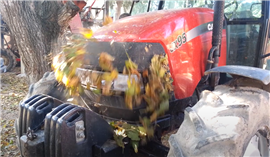 The powerful self-cleaning fan can eject leaves and other matter from heavy equipment
For fleet managers, the relevant measure is elapsed time from stopping work to resuming it.
That includes shutting down as needed, getting out of the cab, accessing and cleaning the pack, then returning to work.
Recording the frequency and duration of those stops on representative shifts gives owners a basis for comparing machines or assessing a retrofit.
It also gives OEMs a better picture of what a cooling package has to cope with after delivery.
Match fan output to cooling demand
Mark MacDonald, Cleanfix’s Director of Commercial Relations and Sales Manager for North America, said changes in off-highway emissions standards had helped shape cooling requirements over the past two decades.
Manufacturers also have to balance heat rejection against space, noise, fuel use and cost. The fan drive and its controls influence how much power the cooling system needs across the duty cycle.
MacDonald recalled a move some years ago, from engine-driven to hydraulically driven fans for greater control.
Where the machine layout allows, a directly driven fan with variable blade pitch can now offer airflow control while retaining a simpler drive arrangement.
Other options include a hydraulic drive or a clutch that varies fan speed.
 Jannick Coenen
Temperature data from the machine’s electronic control unit can help determine when more airflow is needed.
“If we design a good cooling system that allows us to vary the fan power, that frees up power to do real work,” MacDonald said.
For OEMs, that makes part-load operation relevant to design decisions alongside the maximum cooling requirement.
MacDonald said manufacturers typically revisit cooling architecture when they develop a new generation of a machine.
That makes early discussion with suppliers important. A change in fan drive or cleaning strategy can affect how the machine is packaged and controlled, and the manufacturer may have to live with those decisions until the next major redesign.
Size the system for conditions in the field
Some manufacturers allow for debris accumulation by specifying a larger cooling pack.
Armstrong said automatic cleaning can give designers scope to reduce the size of the pack if it keeps airflow closer to its intended level.
The decision depends on how quickly the pack fouls, how effectively the cleaning cycle clears it and how much cooling capacity the machine needs under load.
During the webinar, an audience member asked what happens when the fan reverses during heavy work in high ambient temperatures.
The panel explained that the duration of the cleaning cycle and the airflow the fan can deliver in reverse both matter.
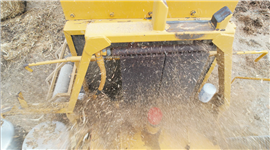 Automatic cooler package cleaning from Cleanfix helps keep performance consistent and eliminate equipment stoppages for cleaning and overheating
A short reversal limits the time away from normal cooling, while sufficient reverse airflow helps clear the pack.
For an OEM, the question is how the system performs during and between cleaning cycles under the loads, temperatures and debris levels the machine is expected to encounter.
Wet debris changes the calculation
The panel drew a distinction between loose dust and wet material that sticks to the cooling pack.
Frequent bursts of reverse airflow can help limit accumulation and extend intervals between manual cleanings.
A fan may still struggle to dislodge material that has adhered to the pack, particularly if it has had time to harden.
For a retrofit, the panel advised starting with a manually cleaned radiator.
MacDonald also pointed to a practical consideration when comparing cleaning methods.
Where a machine has a pressurised, filtered cab, a manual clean requires the operator to leave that environment. Depending on the machine, cleaning can also involve climbing to reach the pack and working near hot components.
The number of stops therefore matters for both productivity and how often operators need to carry out that task.
Plan for machines that run without an operator
Coenen said greater automation puts more responsibility on the machine to identify and respond to deteriorating cooling performance.
 Mark MacDonald
An operator can see a warning, notice rising temperatures and check for a dirty radiator.
A machine working unattended needs controls that can detect a change and decide when to initiate a cleaning cycle or when it needs to stop for attention.
“Monitoring conditions is one thing. We have sensors that can do that. But if the system can’t do anything about what it detects, the machine has to stop,” Coenen said.
The same design question applies to conventional equipment. How long can a machine keep working at the required load before rising temperatures or debris force an interruption?
For manufacturers, answering it means testing cooling performance as the pack becomes dirty and checking how well it recovers after cleaning.
For owners, it means comparing fuel use and cleaning time over a working shift, alongside the machine’s output. Together, those measures give a fuller picture of what cooling costs in service.
--------
To see a full recording of the webinar, simply register for free and download The Hidden Cost of Heat: Smarter Cooling as a Competitive Advantage
--------
All images courtesy of Cleanfix
--------