Read this article in 中文 Français Deutsch Italiano Português Español
US EPA removes requirement for DEF sensors on diesel engines

31 March 2026
The US Environmental Protection Agency has removed the DEF sensor requirement for all diesel equipment operators.
Diesel exhaust fluid (DEF, aka AdBlue or urea) is added to the vehicle exhaust stream to reduce harmful emissions.
The move was made to help eliminate issues caused by faulty DEF sensors. Failure of these parts can put diesel engines into ‘limp home’ mode, effectively taking the vehicle or machine out of service until the part can be replaced.
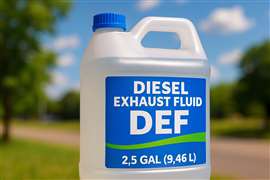 Contamination of DEF fluid can also cause system issues (Photo: AdobeStock)
Due to the cost of repairs and reduced productivity, the government puts forward the change will save farmers about $4.4 billion Savings across all American diesel users could reach $13.79 billion per year.
In February 2026, the EPA demanded critical data covering DEF system failures from manufacturers – companies which have products that make up 80% of all of DEF system failures. This information was used as a basis for removing the requirement for the DEF sensors.
“Failing DEF systems are not an east coast or west coast or heartland issue; it is a nationwide disaster. I have heard from truck drivers, farmers, and many others complaining about DEF and pleading for a fix in all 50 states I visited during my first year as EPA Administrator,” said EPA Administrator Lee Zeldin.
“Americans are justified in being fed up with failing DEF system issues. EPA understands this is a massive issue and has been doing everything in our statutory power to address this. Today, we take another step in furthering our work by removing DEF sensors. Farmers and truckers should not be losing billions of dollars because of repair costs or days lost on the job.”
The preliminary review of the warranty data suggested that DEF sensor failures are a significant source of warranty claims and “DEF-related inducement”.
The EPA has further affirmed approval of NOx sensor-based software updates can be installed on existing engines without being regarded as illegal tampering under the Clean Air Act.
This is said to fall in line with the EPA’s February 2026 Right to Repair clarification, which removed rules barring farmers from fixing faulty DEF systems.
The report ended with the following statement: “Today’s announcement does not weaken or remove emissions standards. Instead, it ensures that those standards are met in a way that actually works in the real world.”
POWER SOURCING GUIDE

The trusted reference and buyer’s guide for 83 years
The original “desktop search engine,” guiding nearly 10,000 users in more than 90 countries it is the primary reference for specifications and details on all the components that go into engine systems.
Visit Now
STAY CONNECTED



Receive the information you need when you need it through our world-leading magazines, newsletters and daily briefings.



CONNECT WITH THE TEAM