Plan for extended lead time for EV charging infrastructure

04 August 2023
A multi-client decarbonization study of the U.S. commercial vehicle market shows the conversion of the commercial vehicle (CV) sector will require a coordinated effort to ensure adequate charging infrastructure is in place to support fleet needs.
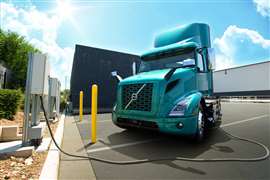 (Photo: Volvo VNR/Volvo Trucks)
The recently released Charging Forward study from ACT Research represents a collaboration with nearly 50 suppliers in battery and fuel cell technology for Class 4 to 8 vehicles. Designed to serve as a business planning tool, it analyzes and forecasts adoption rates of 23 vehicle applications across North America through 2040.
The study found that utilities have typically implemented programs to assist fleets in their infrastructure development, serving as project managers to assist the project from “pole to pad” or even “pole to plug” for participating fleets. However, early adopters of battery-electric CVs often experienced lengthy lead times to install EV charging infrastructure.
“Utilities have now been able to support timelines of nine to 13 months, from initial preliminary design to final design and construction, but those lead times reflect adequate, existing transformer capabilities,” said Ann Rundle, vice president of Electrification & Autonomy, ACT Research.
Longer lead times will be needed in areas that require more extensive grid upgrades, especially if they require additional levels of approval. “Feeder upgrades could take more than a year. Substation upgrades could take one to two years. New substations could take three years or more, as this would encompass planning, load interconnection studies, and complexities in the permitting process,” Rundle pointed out.
In these circumstances, coordination between vehicle acquisition and the supporting charging infrastructure is even more critical, planned around longer time frames to completion.
“A more conservative rule of thumb indicates fleets should begin planning and coordinating behind-the-fence EV charging infrastructure to allow for an 18- to 24-month lead time,” Rundle advised.
POWER SOURCING GUIDE

The trusted reference and buyer’s guide for 83 years
The original “desktop search engine,” guiding nearly 10,000 users in more than 90 countries it is the primary reference for specifications and details on all the components that go into engine systems.
Visit Now
STAY CONNECTED



Receive the information you need when you need it through our world-leading magazines, newsletters and daily briefings.

CONNECT WITH THE TEAM