Read this article in 中文 Français Deutsch Italiano Português Español
European Commission rows back on plans for electric truck quotas

06 January 2026
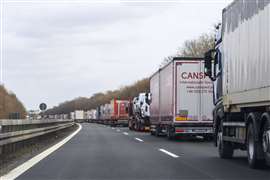 Trucks on autobahn (Photo: Reuters)
In May 2025, Power Progress published an article covering the withdrawal of the request for a waiver which would allow implementation of the California Air Resources Board’s Advanced Clean Fleets rule.
Referred to as the ‘electric truck rule’, it would’ve required all drayage trucks operating in California to be zero direct emissions by 2035.
Following a similar path, the European Commission has now abandoned plans to introduce mandatory electrification quotas for corporate truck fleets. This reverses the proposed policy outlined in the ‘Greening Corporate Fleets’ initiative.
Following the reversal, transport companies operating in the EU will not be obligated to purchase and/or operate a percentage of zero-emission electric trucks.
More than 5,000 companies were reported to have voice opposition to the plan; while this was not directly mentioned, the commission noted the lack of charging infrastructure, grid capacity and vehicle availability as key points in the decision.
Further, the newly-revised Automotive Package will outline no changes to existing rules covering carbon (CO2) emissions or emissions reduction policies. Also, there will be no link between compliance with CO2 emissions regulations and any mandatory electric vehicle purchases.
The reversal of this EU-wide proposal follows the easing of strict zero-emissions mandates for other vehicle types. For example, the 100% zero-emissions target for 2035 covering cars and vans (which would have effectively banned the sale of vehicles with internal combustion engines) has now been changed to a 90% target reduction.
This will allow the sale of a limited number of new petrol/electric hybrid vehicles which will be obliged to use low-carbon fuels to achieve the emissions target.
Going back to the reversal of the proposed electric truck fleet quotas, the policy change could prove worrying to European truck OEMs which have invested billions in vehicle, drivetrain and battery development.
The ending of the push for the Advanced Clean Fleets rule in California has been put forward as one of the reasons why electric truck manufacturer Nikola and others went out of business. With no requirement to purchase the new vehicles, which were considerably more expensive than diesel equivalents, the market effectively evaporated overnight.
While OEMs producing battery-electric trucks in Europe are more robustly funded than their North American equivalents, this decision by the European Commission could still have a direct impact on these companies, both in terms of vehicle production and future investment.
It should be noted that the European Commission has put forward that rather than an EU-wide directive, member states should look to implement their own national zero-emissions truck targets. Whether that plan gains any traction in those markets remains to be seen.
POWER SOURCING GUIDE

The trusted reference and buyer’s guide for 83 years
The original “desktop search engine,” guiding nearly 10,000 users in more than 90 countries it is the primary reference for specifications and details on all the components that go into engine systems.
Visit Now
STAY CONNECTED



Receive the information you need when you need it through our world-leading magazines, newsletters and daily briefings.


CONNECT WITH THE TEAM