Read this article in 中文 Français Deutsch Italiano Português Español
Give me a compelling business reason to change

06 August 2026
An Insider Perspective: Devote time to customers who aren’t satisfied, Part 2
All too often, we seek out customers who validate how we already do things. Instead of seeking uncomfortable, challenging conversations with customers who aren’t satisfied, we subconsciously opt out and engage with customers we know.
If growth is the objective, it’s essential to understand how customers who don’t buy from us think. By understanding the customer needs we are not fulfilling, we can change our products and services to meet those unmet needs and grow our business.
This is the second of three personal stories about conversations with customers who challenged the way I think about product development.
“Give me a compelling business reason to change.”
In 2003, I met Mr. Steve Mitchell, who was then a vice president for Teichert Construction, California’s oldest contractor, and responsible for their large fleet of construction equipment. To emphasize their longevity and success, Teichert holds contractor license number 8 in California, which is the state’s oldest active contractor’s license.
During my first meeting with Steve at the Virgin Sturgeon in Sacramento, Calif. – one of Arnold Schwarzenegger’s favorite restaurants – he said something that has stuck with me and guided how I think about introducing anything new to construction and mining customers. Steve said, “Ken, you need to give me a compelling business reason to change.”
“…an opportunity for improvement.”
During this time, I was accountable for the health of the business relationship between Caterpillar and the dealers in southern and central California, Hawaii, Guam and a few other Pacific locations. My team explored market share data, slicing and dicing it by county, machine, dealer and customer, and created heat maps to clue us in on where to improve or learn best practices.
Our business with Teichert stood out as both an example of great performance and an opportunity for improvement. Cat enjoyed outstanding market share with them with one exception. They purchased no yellow, black and red hydraulic excavators. None. Most of their dozers, wheel loaders and scrapers were Cat. None of the excavators were 300-Series. None. Why?
“…the end-user customer relationship is the dealers’…”
Steve had the reputation for being tough. After I got to know him well, I said facetiously, “Steve, you’re cruel but fair.” His reputation was so tough that dealers discouraged me from speaking with him. They were afraid he would chew me up, but that was even more motivation to meet him.
The end-user customer relationship belongs to dealers, not to a manufacturer or me. So when the dealers were ready to make the introduction, I was ready, too.
“The fear was that Steve would tear me limb from limb if we were in a boat together all day long…”
Opportunity came much sooner than expected during an annual customer fly-fishing trip. Every year, Cat’s CEO would be invited to join a great group of customers for a few days of fly fishing on the Snake River in Idaho. This time, the CEO could not join the trip. He delegated to a group president, also unable to attend, who delegated to a vice president, also unable to attend, who delegated to a region manager who ultimately delegated the trip to the district manager – me.
This was drift-boat-fishing where two fishermen are in a boat all day with a teaching guide standing between them. The fear was that Steve would tear me limb from limb if we were in a boat together all day long – plus the rookie district manager would have no dealer backup and there would be no record of what was said.
“Ron Monroe was the most knowledgeable equipment person I’ve ever met.”
The first day of our three-day trip was an evaluation of me. Can the rookie district manager stand up to scrutiny all day long?
Eagerly taking on the task was the late, great Ron Monroe, former dealer principal of (Caterpillar dealer) Holt of California. Ron was the most knowledgeable equipment person I’ve ever met. He has since passed away, but I have never been able to delete his mobile phone number. In fact, I expect him to call shortly after this is published to set me straight.
“Ron grilled me all day long.”
Ron asked the toughest questions to draw attention away from how many more trout I caught – not true – and that he had a “secret” clicker to count the catch – absolutely true. The relationship we started that day lasted for the rest of my career.
Even after I moved to other roles, Ron would call to share a legitimate complaint and ask for help, knowing he would receive it. I remain humbled to have passed his test that day.
“The next day was with Steve, and it was a great day.”
Steve and I talked about fishing, family, Hawaii, racing and friends most of the day. The fishing was great, and I’m sure Steve has a photo of me with a fly hooked into my right earlobe, the bright floating fly line draped all around me. Humor at my expense is still humor. After a picnic lunch on a bank of the Snake River, we finally get into a discussion about excavators.
“…a performance and cost-per-ton issue.”
It turns out Steve had a specific reason for not choosing our excavators. It had little to do with safety, reliability or environmental stewardship. It was fundamentally a performance and cost-per-ton issue. Teichert did quite a lot of deep trenching work using 35- to-90-ton excavators. The material they often dig is firm and cohesive, so the trench could be relatively narrow and still stand up.
“It turns out efficacy is a really big deal.”
For medium and large excavators, we chose a wider boom profile than our competitors. The seemingly sound thinking was that this design would provide superior durability.
The problem in Teichert’s application is they had to move significantly more material to open the trench to accommodate our wider front structure. From an earthmoving project standpoint, that material would not need to be moved if the digger’s front structure profile were narrower – advantage competition. It turns out that efficiency (i.e., cost per unit of material moved) is a really big deal!
“Teichert standardized to a competing brand…”
Rather than purchasing smaller machines from us and deep trenchers from another manufacturer, Teichert standardized on a competing brand. They performed much of their own maintenance, and the strategy was that this standardization would simplify product support. There would be no way of selling any excavators to them unless we solved the performance and cost problem – the efficiency problem – we had with 35- to 90-ton excavators.
“This was a problem we had created for ourselves…”
This wasn’t an issue of Steve’s reputed stubbornness. This was a problem we had created for ourselves with the design choices we made! Once understood, the greatest challenge was convincing engineering to design what was needed and then manufacturing to tool up for the change. “We have always done it that way. No one ever complained before.”
Ultimately, we introduced a regional narrow front option. Once the design proved itself regionally, the narrow front was included in the product specifications as the standard front. Every deep trencher in the world can benefit from moving less material to get to the required grade.
“…trust is an incredibly important factor…”
Once we solved our efficiency problem, Teichert began considering and eventually choosing our hydraulic excavators. This change did not occur immediately. It took time and a product support failure by the competition to open the door.
Once Teichert trusted that our new design would perform reliably, they began to change. It turns out that, in addition to performance and reliability, trust is an incredibly important factor in their machine buying process.
“…a compelling business case has not been… made.”
We often hear mining and construction companies are reluctant to accept new technologies. That’s simply not true. If customers trust that a new product helps solve a problem or takes advantage of an opportunity, whether it’s an exponential technology or old-fashioned dumb iron, they will buy it. Reticence about a new idea or technology simply means that a compelling business case has not been convincingly made.
© 2026 Copyright by Cyan Sky Media LLC. All rights reserved. Published with permission.
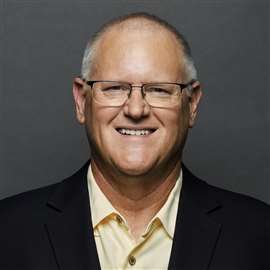 Kenneth D. Gray
About the Author
Ken Gray is an internationally recognized construction and mining equipment executive best known as the leader behind Caterpillar’s first hybrid construction machine. For over 40 years, he has developed, manufactured, marketed and supported construction and mining equipment, customers and dealers.
He retired from Caterpillar in 2016 after serving as Global Director of Innovation and as Director of Excavation and Building Construction Products Divisions, holding worldwide accountability for Large and Small Excavators, respectively. Earlier roles included software development, engineering, marketing and dealer development.
Ken co-founded Dig Robotics in 2023 with Noam Rotem and Dr. Oded Medina, focusing on improving excavation performance through a human-centric approach. He currently serves as the company’s chief performance officer.
POWER SOURCING GUIDE

The trusted reference and buyer’s guide for 83 years
The original “desktop search engine,” guiding nearly 10,000 users in more than 90 countries it is the primary reference for specifications and details on all the components that go into engine systems.
Visit Now
STAY CONNECTED



Receive the information you need when you need it through our world-leading magazines, newsletters and daily briefings.
CONNECT WITH THE TEAM