Read this article in 中文 Français Deutsch Italiano Português Español
Global grid investment could hit $970bn a year by 2050

07 October 2026
Annual investment in global electricity transmission and distribution networks could more than double to $970 billion by 2050 as rising power demand puts growing pressure on grid infrastructure, according to McKinsey & Company.
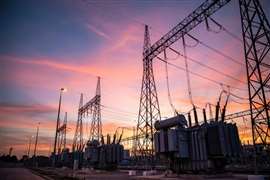 Annual investment in global electricity transmission and distribution networks could more than double to $970 billion by 2050. Image: Adobe Stock
The consultancy’s Global Energy Perspective 2026 report projects investment rising from $443 billion in 2025, with grids becoming an increasingly important constraint on how quickly new generating capacity can be turned into usable electricity.
McKinsey described the grid as the energy transition’s “ultimate speed limit”, arguing that transmission, storage, firm generating capacity, permitting and interconnection will increasingly determine the pace of development.
The findings come as global energy demand continues to grow. McKinsey said demand increased 2.7% in 2025, with oil, gas, coal and renewables all expanding simultaneously – a trend it described as a shift from an “energy transition” towards a broader “energy expansion”. Hydrocarbon Engineering
Electricity demand is expected to account for a disproportionate share of future growth, with AI and data centres adding another rapidly expanding source of demand.
For the construction industry, that points to growing requirements not only for new generation but also transmission lines, substations, storage facilities and other supporting infrastructure.
Infrastructure readiness
McKinsey said infrastructure readiness is already a binding constraint across the different scenarios examined in its report. Where networks and associated infrastructure fail to keep pace, electrification could be slowed even where additional generating capacity is available.
The report also warned that an increasingly electrified and digitised energy system is creating new supply-chain risks. Future energy constraints could be driven by shortages of equipment, labour, batteries, semiconductors or critical minerals, as well as traditional fuel supply.
Humayun Tai, senior partner and global leader of McKinsey’s Energy & Materials Practice, said, “The energy transition has become an energy expansion.”
McKinsey’s 2026 report considers four different scenarios through to 2050 rather than identifying a single most likely outcome, reflecting uncertainty around geopolitical developments, AI-driven demand, technology costs and the pace of decarbonisation.
But across those different futures, the need for substantial investment in the physical infrastructure needed to move and manage electricity remains a common theme.
POWER SOURCING GUIDE

The trusted reference and buyer’s guide for 83 years
The original “desktop search engine,” guiding nearly 10,000 users in more than 90 countries it is the primary reference for specifications and details on all the components that go into engine systems.
Visit Now
STAY CONNECTED



Receive the information you need when you need it through our world-leading magazines, newsletters and daily briefings.



CONNECT WITH THE TEAM