Read this article in 中文 Français Deutsch Italiano Português Español
Workhorse to enter modular AI infrastructure market

29 October 2026
Partnership with Rhaelm could include a supply agreement, initial order for 150 TerraPod systems
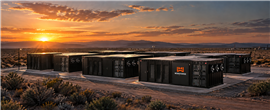 Workhorse said the TerraPod systems will be built on a production line rather than a construction site and designed to be sited on deployment-ready foundations, produced at scale and put into commercial use far faster than conventional facilities. (Illustration: Workhorse Group)
Workhorse Group Inc. and Rhaelm Holdings Ltd., a London, England-based developer of vertically integrated AI infrastructure, has announced a strategic partnership to jointly commercialize Workhorse’s TerraPod modular data center platform. The partnership will Workhorse’s U.S. engineering and manufacturing capabilities with Rhaelm’s global energy partnerships and AI customer relationships.
“As industry leaders in AI compute and infrastructure continue to develop standardized requirements, we believe the modular data center industry is approaching its ‘Model T’ moment,” said Scott Griffith, Chief Executive Officer of Workhorse. “Our partnership announcement with Rhaelm goes beyond acting as a launchpad for our TerraPod product; we believe it’s the beginning of an era of mass production of the systems that will enable rapid deployment of cost-effective, secure and highly distributed AI compute capabilities.”
Workhorse and Rhaelm have entered into a Manufacturing Spec Unit Purchase Agreement, under which Rhaelm will pay Workhorse $10 million to build a full-scale TerraPod manufacturing spec unit at Workhorse’s Union City, Ind., facility. The companies also signed a non-binding Letter of Intent that sets a path to sign a definitive Supply Agreement, which is framed to include a first order provision for 150 TerraPod systems.
The companies are targeting execution of the Supply Agreement by Dec. 31, 2026.
Demand for AI compute is growing faster than traditional data centers can be built, said Workhorse. TerraPod is being designed to help speed time-to-market for new data centers with factory-built, modular units that will bring compute, power distribution, cooling, communications, systems control and fire suppression together into rapidly deployable integrated systems.
TerraPod systems will be built on a production line rather than a construction site and designed to be sited on deployment-ready foundations, produced at scale and put into commercial use far faster than conventional facilities. Rhaelm is working with partners in a blueprint collaboration to set reference design requirements for its modular compute offering and related standards, and through this relationship, the companies intend for TerraPod to be developed as a modular physical platform designed to meet those standards.
“AI’s limiting factor today isn’t ambition, it’s power and compute,” said Bradd Lewis, CEO, Rhaelm. “We partner with generators that already hold committed capacity, and as standardization continues, turning that power into compute moves from the field to the factory. In Workhorse, we have the manufacturing partner to make that happen. Together, we believe we can deliver AI compute at scale, years ahead of the conventional timeline.”
Founded as Sovereign AI, the company’s name was changed to Rhaelm in September.
Three phase partnership
The companies have structured the partnership in stages, with an initial commitment starting immediately and a non-binding framework laying the groundwork for further planned expansion.
Phase 1: Build the reference unit. Under the Spec Unit Agreement, Workhorse will build a TerraPod manufacturing spec unit, consistent with the standard modular data center blueprint being developed by Rhaelm and its partners. The unit will serve as a physical reference for equipment fitment, service access and assembly sequence. This approach enables Rhaelm and its commercial partners, equipment suppliers and prospective customers to view, interact with and refine the design before committing the capital needed to deliver final prototypes and ultimately begin production.
Phase 2: Sign the Supply Agreement. The companies also have created a framework for expansion of the relationship through a Supply Agreement that they are targeting for execution by year-end 2026. Under the contemplated framework, the Supply Agreement would allow for expanded joint engineering efforts, a structure for milestone-based prepayments toward a first order, and a U.S. right of first refusal giving Workhorse the opportunity to supply modular data center units for all future Rhaelm projects in the United States.
Phase 3: Scale to production. The Letter of Intent also expresses the companies’ intention that once the Supply Agreement is signed and Rhaelm accepts the co-developed platform, Rhaelm would place an initial order for production of 150 TerraPod systems, subject to definitive documentation and required internal approvals. The companies also intend to have Workhorse become an official modular data center supply-chain provider to the Rhaelm blueprint collaboration, subject to the consents of its consortium partners. This could give TerraPod access to Rhaelm’s prospective global project pipeline, serving the world’s AI builders. Workhorse believes TerraPod production can begin in late 2027 or early 2028.
“This ‘walk-before-you-run approach’ is designed to streamline and accelerate time to full production, while also providing a structure that puts our teams together on initial work right now,” said Griffith. “Just as important, this structure gives us a seat at the table with Rhaelm and a highly complementary set of partners as the industry standardizes modular designs. We believe the Supply Agreement we are targeting by year-end will chart the course to full scale production and give us a clear pathway to significant future commercial volume for TerraPod.”
Diversification
First announced by Workhorse in July, the initial containerized design that has become the TerraPod is expected to feature liquid-to-liquid cooling, isolated server racks, a separate climate-controlled operator zone with two workstations, integrated uninterruptable power supply (UPS) and battery back-up power, a fire suppression system, advanced monitoring for safety and security, and the ability to use multiple sources of external power, among other capabilities needed to operate a mobile AI data center.
Workhorse Group is, of course, also a manufacturer of electric trucks.
In September it announced that Gateway Fleets had placed a follow-on purchase order for 200 W56 fully-electric step vans. Gateway, a California-based provider of turnkey electric vehicle and charging solutions for commercial delivery operators, is purchasing the vehicles through Kingsburg Truck Center (KTC), with the intent to lease them to its customers, who are primarily last-mile independent package delivery providers.
The W56 step vans available through Gateway are Standard Wheelbase (178 in.) configurations with a 210 kWh battery, offering 1,000 cu. ft. of cargo space, a payload of 10,000 lbs. and a nominal range of 150 miles per charge. Every van features a fully-integrated, purpose-built composite body, an ergonomic driver environment, and a platform engineered for the demands of high-cycle last-mile delivery. Vehicles contracted in this new order are expected to begin deploying to customers in the second half of 2027.
POWER SOURCING GUIDE

The trusted reference and buyer’s guide for 83 years
The original “desktop search engine,” guiding nearly 10,000 users in more than 90 countries it is the primary reference for specifications and details on all the components that go into engine systems.
Visit Now

CONNECT WITH THE TEAM