Read this article in 中文 Français Deutsch Italiano Português Español
Executive Q&A: MayMaan’s Schmueli explains new Engine Integration Program

04 September 2025
MayMaan, which describes itself as a “scale-up innovator transforming combustion technology,” recently announced a scalable partnership model for engine manufacturers, OEMs, distributors and other strategic partners that it said will support the transition to more efficient power systems across global industries.
 Michael Schmueli
At the heart of the company’s offering is its AquaStroke technology, which is designed to run on a 70% water and 30% ethanol fuel blend. According to MayMaan, the system delivers high torque and reliability while substantially reducing emissions, making it a viable alternative to diesel engines and electrification overhauls.
The Power Briefing editorial team reached out to Michael Schmueli, vice president of Corporate Communications at MayMaan, to learn more.
PB: What prompted MayMaan to launch the Engine Integration Program now, and how does it build on the work you’ve done with AquaStroke so far?
The timing was driven by demand. Over the past few years, AquaStroke has proven itself in real-world applications — delivering reliable power while cutting harmful emissions such as NOx (nitrogen oxides) and SOx (sulfur oxides) to levels that are practically immeasurable. As regulations tighten and pressure mounts on OEMs to decarbonize without compromising performance, we recognized a clear opportunity to scale.
The Engine Integration Program is the next step. It takes the core AquaStroke technology — already tested and validated — and provides a structured pathway for OEMs and industrial partners to integrate it into their own platforms. It’s a plug-in model for those who want to innovate fast, meet sustainability goals and bring cleaner solutions to market without starting from scratch.
PB: Who are the ideal partners for this program — engine OEMs, equipment builders, service providers — and how are they responding so far?
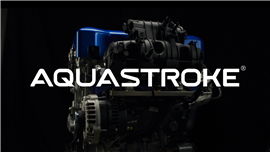 At the heart of the company’s offering is its AquaStroke technology. (Source: MayMaan)
The ideal partners for our Global Engine Integration Program are engine OEMs, equipment manufacturers and system integrators who design and build their own engines from the ground up. These are companies with in-house engineering capabilities and established manufacturing platforms, often supplying engines for power generation, construction, critical infrastructure and heavy-duty applications.
We’re already working with several such organizations — ranging from legacy engine developers to regional manufacturing leaders — who see this as a low-risk, high-impact opportunity to meet growing emissions and sustainability mandates. The response has been overwhelmingly positive, especially because our system allows them to maintain performance standards while offering a cleaner, future-ready alternative.
PB: You’ve said AquaStroke is a “drop-in” solution. What does that mean in terms of effort required by an OEM or packager to adopt the technology?
“Drop-in” means just that — our AquaStroke system is engineered to integrate into existing engine architectures with minimal modifications. For OEMs, this reduces development time and capital risk. Most of the core engine block remains the same; we provide the combustion system, software and support for integration. It’s a faster, lower-cost path to producing cleaner engines that still deliver diesel-like torque and performance.
PB: Can you share any early success stories or initiatives currently underway through this new partnership model?
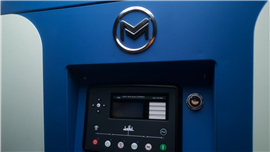 AquaStroke engines have already been successfully deployed in commercial settings. (Photo: MayMaan)
We’re currently working with several global partners under this partnership model, including active programs in both Europe and the U.S. In South Florida, our AquaStroke engines have already been successfully deployed in commercial settings operating in high-demand environments.
In Europe, we’re implementing this model with SPIE as our manufacturing, service and maintenance partner. In parallel, we are collaborating with EU-based engine manufacturers, distributors and sellers to scale integration and deployment. These partnerships are already demonstrating the strength of our model by reducing time to market, ensuring localized support and delivering cleaner combustion without sacrificing performance.
PB: What types of applications or industries are you prioritizing with the program, and why?
 MayMaan’s Engine Integration Program is a scalable partnership model to support the energy transition. (Photo: MayMaan)
We’re focused on industries where reliability, emissions regulations and rising energy demands intersect — such as backup power for data centers, marine, telecom infrastructure, disaster response and construction. These sectors have traditionally relied on diesel due to its power density and availability, but they now face increasing pressure to adopt cleaner, more cost-effective and sustainable alternatives.
Our solution offers a compelling answer: the performance and durability of diesel with a drastically reduced emissions profile, and without the need for grid connectivity or extensive reengineering. That’s a combination that resonates strongly in these critical-use industries.
PB: What are the biggest hurdles to broader adoption, and how are you helping partners overcome them?
We don’t see major hurdles. What we’re experiencing is the natural process of introducing a new concept into a well-established market. Anytime you’re bringing real innovation to a traditional space like combustion, there’s a period of adjustment.
We’re helping partners overcome that by demonstrating, clearly and consistently, that there is a cleaner, viable and commercially ready solution for backup power generation available today. With proven performance, minimal integration effort and full support, AquaStroke gives OEMs and operators the confidence to embrace a future-ready system without compromising on reliability or profitability.
PB: Looking ahead, what do you see as the biggest opportunity for MayMaan in the next 12 to 18 months, and how will this program help you get there?
The biggest opportunity we see lies in scaling higher-output engines designed for what we call “domino sectors” — industries where once adoption starts, it tends to trigger widespread replication across the value chain. Sectors like data centers, marine and construction are all actively seeking immediate, deployable alternatives to diesel. When one major player adopts a viable solution, others tend to follow quickly.
Our model — built on strategic manufacturing partnerships and licensing — enables rapid expansion without the delays of building infrastructure from scratch. By localizing production and simplifying integration, we’re helping partners meet demand faster and lead the transition to cleaner, more efficient backup and primary power solutions.
POWER SOURCING GUIDE
The trusted reference and buyer’s guide for 83 years
The original “desktop search engine,” guiding nearly 10,000 users in more than 90 countries it is the primary reference for specifications and details on all the components that go into engine systems.
Visit Now

CONNECT WITH THE TEAM